How to Respond to a Mental Health Crisis Call
June 17, 2026
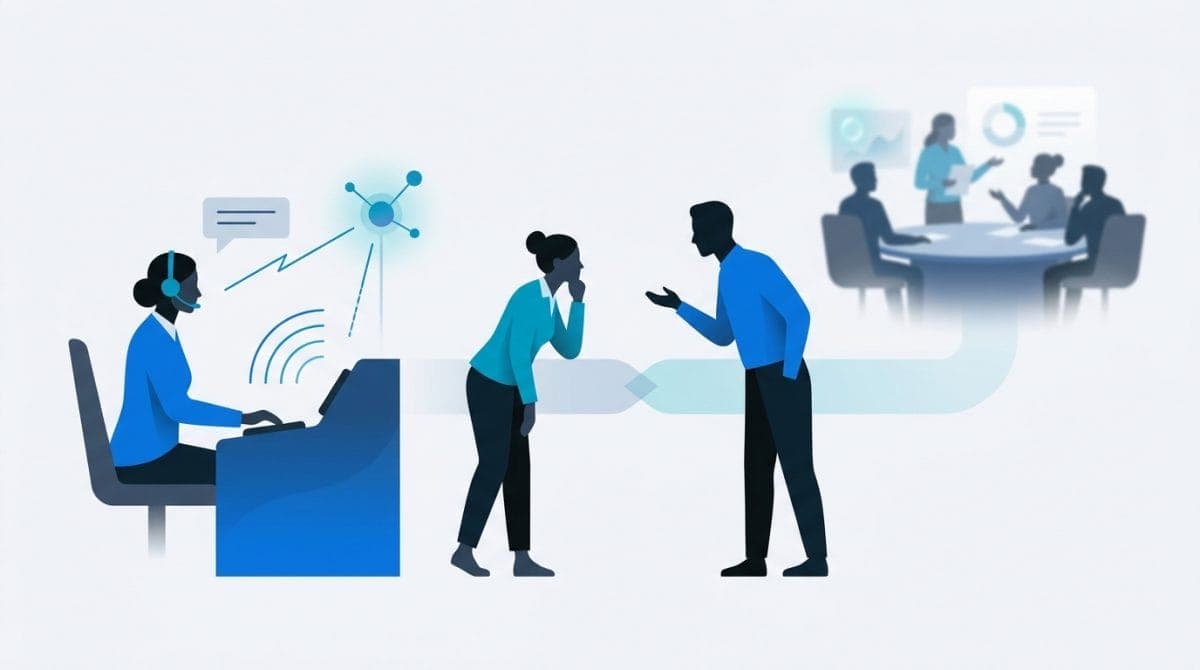
How to Respond to a Mental Health Crisis Call
To respond to a mental health crisis call, slow the encounter down, prioritize safety for everyone present, and use calm, deliberate communication to build rapport. Assess for medical emergencies and weapons, then shift toward connecting the person in crisis to appropriate behavioral health resources rather than defaulting to arrest or force.
What a mental health crisis call actually requires
A mental health crisis call differs from a typical service call because the person experiencing a mental health crisis may not process commands the way an officer expects. Confusion, fear, or symptoms of a psychiatric or substance use condition can make rapid compliance unlikely. The goal is stabilization, not control for its own sake.
Research from the National Institute of Justice on police responses to people in crisis underscores that outcomes improve when officers are trained to recognize behavioral health symptoms and to adjust their approach accordingly. Handling mental health calls well begins with that recognition.
First steps on arrival
When you arrive at a scene involving a possible mental health emergency, work through a deliberate sequence rather than rushing the contact.
- Gather information first. Ask dispatch and any callers what prompted the call, whether weapons are involved, and whether the person has a known behavioral health history.
- Control the environment. Reduce noise, lights, and the number of people surrounding the individual. Sensory overload escalates many crises.
- Assess for medical needs. Some presentations that look behavioral are medical. If there is a clear medical emergency, coordinate emergency medical services immediately.
- Create space and time. Distance and patience are tactical advantages. Time is usually on your side when there is no imminent threat.
Communicating with a person in crisis
De-escalation is the core skill of any effective mental health response. The objective is to lower the emotional temperature so the person can engage with you and accept help.
Practical communication tactics include:
- Speak slowly, in a low and steady voice, with simple statements.
- Introduce yourself by name and explain that you are there to help.
- Use active listening: reflect back what you hear, acknowledge the person’s feelings, and avoid arguing with delusional content.
- Give the person realistic choices to preserve dignity and a sense of control.
- Avoid ultimatums, sarcasm, and crowding.
The IACP One Mind Campaign materials describe how agencies can build communication and response practices into everyday policy. Public guidance like this reinforces that calm, structured contact reduces the likelihood that a mental health crisis ends in force or injury.
Recognizing the warning signs
Officers handle mental health calls more effectively when they can read the signs of escalating distress. Watch for rapid speech or sudden silence, disorientation, paranoia, talk of hopelessness, or statements suggesting the person is suicidal. The NAMI guidance on calling 911 and talking with police offers a public, family-facing perspective on what crisis looks like from the other side of the encounter, which can sharpen an officer’s situational awareness.
If the person expresses suicidal intent, treat it seriously every time. Maintain contact, remove access to means where you safely can, and move toward connecting them with crisis care.
Connecting people to behavioral health resources
One of the most important shifts in mental health crisis response is recognizing that the emergency department or jail is not always the right destination. Many communities now offer alternative crisis pathways, including mobile crisis teams, crisis stabilization units, and community health partners who can take over care.
The 988 Suicide and Crisis Lifeline overview from SAMHSA describes the national crisis lifeline that connects callers to trained counselors. The broader SAMHSA framework for behavioral health crisis care outlines the three-component model many regions are building: someone to call, someone to respond, and a safe place to go.
Knowing your local resources matters as much as any national number. Before a shift, officers and supervisors should understand:
- Which mobile crisis teams operate in the jurisdiction and how to request them.
- Where the nearest crisis stabilization or behavioral health center is located.
- How co-responder programs pair officers with mental health professionals for in-person outreach.
- What referral and follow-up options exist after the immediate crisis passes.
When a person in crisis can be safely diverted to crisis support or community health services instead of hospitalization or custody, that is frequently the better outcome for the individual and the system.
When to call 911, when to involve crisis services
Officers are often the response to a 911 call, but the reverse coordination matters too. If a situation is primarily a mental health emergency with no crime and no imminent danger, looping in mobile crisis teams or the 988 system can route the person toward clinical care faster. The U.S. Department of Justice has examined these models in its BJA Police-Mental Health Collaboration program resources, which document a range of crisis response structures agencies use nationwide.
The decision is situational. Imminent threat to life still requires a law enforcement response. A person experiencing a mental health crisis without violence may be best served by behavioral health professionals taking the lead while officers provide scene safety.
Training that supports better crisis response
Skill in handling mental health crises effectively is built through repetition, not a single briefing. Established models inform how agencies train. The crisis intervention team approach, often called CIT or the Memphis Model, emphasizes partnership between officers and mental health providers. Communication-centered frameworks such as PERF ICAT focus on slowing encounters down. Colorado agencies may also encounter Colorado CRIT, and decision-making research from Force Science continues to shape how officers understand reaction time and perception under stress.
For a deeper overview of how these pieces fit together, see our resource on police mental health training. Scenario-based, voice-driven practice lets officers rehearse de-escalation language and intervention decisions before they face them on a real call.
How this fits Colorado training requirements
For Colorado agencies, it helps to understand where this training sits in the in-service picture. De-escalation, crisis intervention, and mental health awareness are non-perishable topics that count toward the discretionary portion of Colorado POST Rule 28’s annual in-service requirement. Web-based courses approved by the chief qualify, and eligibility for that credit is at the chief executive’s discretion.
The underlying de-escalation training requirement is set out in C.R.S. 24-31-315. CodeBlu does not grant POST credit and does not submit completion records to POST; those decisions and submissions remain with your agency. This framing applies only to the discretionary in-service category, not to perishable-skills credit.
Key takeaways for the next crisis call
- Slow down, assess safety and medical needs, and reduce environmental stressors.
- Use calm, respectful communication and active listening to build rapport.
- Treat any expression of suicidal intent seriously and limit access to means.
- Know your mobile crisis teams, 988 access, and local crisis stabilization options.
- Connect the person to behavioral health care and follow-up referral whenever it is safe to do so.
Responding to a mental health crisis call is one of the most demanding tasks in modern policing. The officers who do it best treat every contact as an opportunity to stabilize, protect dignity, and link the person to appropriate crisis services rather than escalating an already fragile moment.
About this guide
This guide is produced by the CodeBlu editorial team using public, primary sources and is reviewed and updated periodically as standards and crisis resources evolve; see our methodology for how we research and verify this material.